The materials in stock are generally sized for small items, such as pens, sewing items, small boxes, game calls, and the like. Larger pieces can be ordered as needed for special requests. For a quote on a complete project, please use the contact page to send me your request.
Sustainability: Although most of the woods I use are considered “exotics”, none of the species are listed in the CITES Appendices or on the IUCN Red List of Threatened Species.
In Stock Hardwoods and Acrylics
Bocote
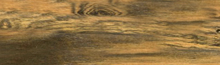

Bocote (cordia gerascantus) : A small tree seldom growing larger than 12″ in diameter. Heartwood is a yellowish brown accented with black lines. Freshly cut Bocote has a green tinge, and is oily to the touch. The grain is heavy and very distinct in turned items.
Cocobolo
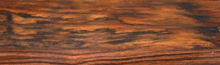

Cocobolo (dalbergia retusa) : A medium size tree growing up to 2 feet in diameter 90 feet tall. Heartwood varies from a bright orange to a deep red with attractive varied stripes of yellow, black, and orange. Darkens on exposure. A fine texture and excellent color make Cocobolo one of the most popular exotic woods.
Hububalli
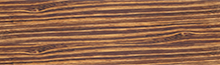

Hububalli / Hububali (Loxopterygium sagotii): Hububalli is a South American hardwood. The heartwood is primarily light reddish brown, commonly with darker streaks. The grain is generally straight, but may also be interlocked or wavy. Uniform medium texture with good natural luster. The heartwood fluoresces when put under a blacklight.
Padauk
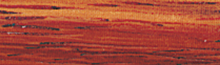

Padauk (Pterocarpus soyauxii): African Paduak is a very strong, stable hardwood. It is known for its typically robust reddish-brown coloration (which darkens with age), although colors can range from a bright orange to a slightly muted burgundy often with highlights, grain lines and/or secondary colors ranging from brick red to a more purplish muted hue. The wood can sometimes be found figured (ribbon; striped; etc.), and it is well known for its deep chatoyance and wonderful natural luster. Grains are typically straight, though sometimes interlocked.
Purpleheart
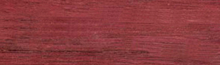

Purpleheart (peltogyne venosa): The color is a dull brown when freshly cut, but quickly turns to a purple hue upon exposure to sunlight.
Redheart
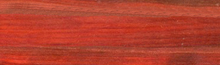

Redheart, a.k.a. Chakte Kok (Erythroxylum spp. and Simira spp.): Redheart is a unique Central / South American hardwood characterized by a reddish base color — ranging from dull to bright pink, pinkish-red or red — with streaks and highlights diverse in color, from darker red tones. Its texture is fine and smooth, although it does not possess much natural luster. However, it accepts lustrous finishes well, though a brown color shift is to be expected.
Red Coconut Palm
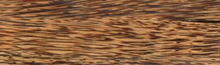

Red Coconut Palm (Cocos Nucifera): Coconut palm is a tropical tree that grows in moist soil worldwide, typically near saltwater. The tall, stately Coconut is one of the best known trees in the world. It often grows to a height of 100 ft. or more and is one of the top 10 most important trees in the world. Because of its mixed density, Coconut is somewhat a difficult wood to work with. It is difficult to turn on a lathe.
Tamarind, Spalted
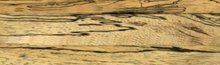

Tamarind, Spalted Tamarind (Tamarindus indica): Native to tropical Africa it is widely planted throughout tropical regions worldwide. The tree is generally 50-80 ft tall and 2-3 ft in trunk diameter. The pale yellow sapwood is very wide and sharply demarcated from the reddish brown heartwood. Spalting and other discoloration are very common in the sapwood. The grain is wavy and interlocked with a medium uniform texture. Because of its density and interlocked grain, Tamarind is generally considered difficult to work. Tamarind trees are best known for their fruit, not wood. Tamarind trees are widely planted throughout the tropics both for their fruit, and also as an ornamental.
Special Order Hardwoods and Acrylics
Bethlehem Olivewood
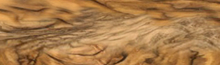

Olive (Olea europaea, O. capensis): Olive wood trees from the ancient city of Bethlehem, Israel (also known as Roman trees) have been bearing fruit since the time of the Romans. Many religious, historical, and artistic articles are made from this beautiful ancient wood. Olivewood is highly desired for its often spectacular aesthetics; being known for its gorgeous, often-twisting grain patterns and dramatic figuring. Defects are not uncommon, and can often present some challenges when working, but hard work and perseverance can produce extraordinary results; there’s really no other wood quite like it. Because of the fruit’s economic importance, healthy, cultivated Olive trees aren’t felled for lumber; availability is generally limited to pruned branches, trimmings, and diseased/storm damaged orchard trees. Purchase includes certificates of authenticity and labels for your finished projects.